
GM cites global pandemic as reason for the step. Firm had stopped selling cars in India in 2017 and stopped production completely on December 24, 2020.

On Day One of the lockdown announced by the Maharashtra Government, it wasn't business as usual for automobile manufacturing units in the State. Confusion prevailed over regulations-what is allowed and what isn't. While some units ran with less than half the workforce, others sought clarity from the government on what is permissible and what isn't.

Attributing the delay in debt servicing to a liquidity crisis, the company said its total indebtedness was Rs 518 crore.

The five-year (2015-16 to 2020-21, or FY21) compound annual growth rate (CAGR) of the overall auto industry is now negative at 2 per cent, against 5.7-per cent growth it saw in the previous five years (from 2010-11 to 2015-16).

The lockdown in Maharashtra will have a catastrophic impact on April sales, as dealers will not be able to realise the potential of festivities like Ugadi, Gudi Padwa, Baisakhi and Poila Boishakh.

With the Supreme Court not getting into the valuation part and leaving it to the two parties, lawyers said there was nothing much for Mistry Group to negotiate.

The entire proceeds from the sale of Reliance Centre will be utilised only to service YES Bank debt.

'I see a virtually zero impact on the sales of new vehicles with this move,' said an expert
Even as lenders are getting ready to send more companies to bankruptcy courts from this week, several old cases are still awaiting resolution with no clarity on the completion of the process. This includes some high profile cases from the first list of 40 companies including Videocon Industries, Bhushan Power and Steel and Lavasa Corporation, sent by the Reserve Bank of India (RBI) for resolution. The delay is mainly due to litigation and late clarifications by various government agencies including the Reserve Bank of India and litigation by the Enforcement Directorate.

India Inc's cash pile was up 13.8 per cent last fiscal year, thanks to a combination of higher profits in sectors such as IT and fund raising by top companies such a Reliance Industries, Bharti Airtel and Tata Motors, among others.

When Anand Mahindra becomes non-executive chairman in November, Shah will become the first professional MD and CEO in the history of the Mahindra group to have a complete oversight of and responsibility for the Mahindra group businesses.

Holidayers, including those who would head overseas between April and June, are set to escape to the hills, beaches, and resorts in the country. This is to fend off the heat and beat the pandemic blues, indicates the initial bookings and online search trends.
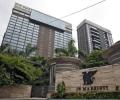
Marriott International is looking to make deeper inroads into leisure destinations as it seeks to make the most of domestic travellers' pent-up demand, said the company's top official. The world's largest hotel operator will add seven new properties in India in 2021, five of which will be in leisure locations - two in Goa, and one each in Mahabaleshwar, Thiruvananthapuram, and Dehradun.

Bajaj Auto has amended its dividend distribution policy as it seeks to reward its shareholders and boost return ratios. The amended policy will also consider the surplus the company has when calculating the dividend payout as a percentage of profits after tax, the Pune-based firm said in a stock exchange filing on Thursday.

The recent report in the New York Times that China had brought India's financial capital - Mumbai - to a halt by hacking the electricity supply grid has not come as a surprise to the CTOs (chief technology officers) and cyber security experts. Indian companies, including critical infrastructure providers such as power grids, ports and radar systems, lack the IT infrastructure to prevent hacking from hostile state actors like China and North Korea, warn security experts. Recently, the United States government warned of yet another breach of critical systems tied to Microsoft Exchange email systems that the company has blamed on China. The breach has impacted thousands of organisations in the US and its impact on India is still unknown.

Indian corporate are fast tapping the international bonds market to raise funds for their operational expenses even as they reduce their presence in the rupee bond market. As bonds are costlier for companies and investors are more sceptical than the banks, chief financial officers say they are looking at other avenues for raising funds in the coming months as dollar bond rates are lower in the range of 100 to 250 basis points. "For corporate with reasonable credit quality, the Indian bond market has become less of an option from a cost point of view. "In addition, conditions imposed in the Indian bond market by investors post Franklin episode have also become very onerous," said Prabal Banerjee, president-finance of Bajaj group. "Hence very few corporate are looking at the local bond market for resource mobilisation, since both, bank loans and the overseas bond markets are much more attractive," he said.

Recently, Suzuki Motor Corp (SMC) in an investor presentation expressed strong intent to enter the electric vehicle (EV) space. This is part of a larger strategy the Hamamatsu-based firm has drawn up in developing electrification of technologies as it seeks to achieve carbon neutrality. The significance of this presentation is that it marked the first time that the Japanese carmaker spelt out its EV strategy with well-defined timelines. SMC plans to develop electrification technologies by 2025, fully implement them in products from the same year, and make a full-scale quantitative increase from 2030.

'The hackers' objectives were centred around smearing India's reputation, causing productivity loss, creating operational damage and seeking financial gains.'

The local arm of the Japanese two-wheeler manufacturer accounts for every second scooter sold in India.

'We are working in association with the state government and other transmission companies to make sure that the city never experiences blackouts'
 © 2026 Rediff.com - Investor Information - Advertise with us - Disclaimer - Privacy Policy - Sitemap - Feedback - About us - Terms of use - Grievances